Numerous Jewish families that survived the Holocaust were those that worked (forced labor) in Piotrków factories. What was special was the fact that the families were allowed to stay together, mothers, fathers, and children. In December 1944, he and his son were sent to Buchenwald, while his wife was sent to Ravensbrück and Bergen-Belsen. In Buchenwald, he was separated from his son and sent to Berga, and from there, on a death march from which he was liberated by the Soviet Army on May 9, 1945. He reunited with his wife and son in Bergen-Belsen in June 1945.
Thursday, July 20, 2023
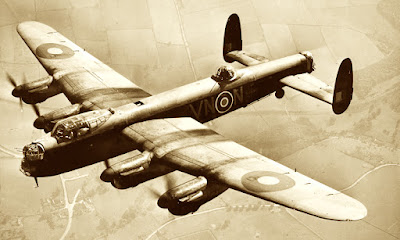
The Children from Piotrków through Theresienstadt to England - Airlift by British Lancaster bombers.
 |
 |
 |
| Ben (Beniek) Helfgott and his father Moszek were deported in December 1944 to concentration camp Buchenwald. His mother Sura and little sister Lusia were murdered during the Aktion in 1942. When deported from Buchenwald to Theresienstadt Ben learned that his father had been shot a few days earlier as he tried to escape from a death march that was headed to Theresienstadt. His father was 38 when he was killed. |
 |
| The last photo was taken in Prague in August 1945 before the transfer to England. |
 |
| England - girls. |
History
The ghetto in Piotrków was the first ghetto in occupied Poland.
The ghetto in Piotrków was the first ghetto in occupied Poland.
Deportations to the death camp Treblinka started from the Piotrków Ghetto in October 1942. In one week approximately 20 000 Jews were rounded up and deported to Treblinka. Numerous families were split during this action and the survivors of this action lived in the compounds close to the Piotrków factories where they were slave workers. Thereafter, there was another deportation, this time not to the death camp but to concentration camps read HAASAG factories at the beginning of 1943. In other actions, Piotrków Jews were rounded up and killed in nearby woods.
In December 1944 Jews from the Piotrków factories where they worked as force labour, they were sent to the Buchenwald and Ravensbrück concentration camps. Numerous men sent to Buchenwald were divided, and part of them were sent to a subcamp och Buchenwald, the concentration camp in Schlieben (Berga). In April 1945 they were transported to Theresienstadt and liberated there after three weeks.
Airlift from Theresienstadt/Prag by British Lancaster bombers.
The British government agreed to take a thousand young survivors. However, only 732 could be found in the Prague area. The airlift was organized by the Central British Fund and by Jewish refugee organizations. On 14 August 1945 a dozen Lancaster bombers carried three hundred children, who had been incarcerated at the Theresienstadt camp, out of Prague. They were flown to Carlisle, England. Forty of them had tuberculosis. Further, transports arrived in the following twelve months, altogether 732 children, of them were only 80 girls.
In December 1944 Jews from the Piotrków factories where they worked as force labour, they were sent to the Buchenwald and Ravensbrück concentration camps. Numerous men sent to Buchenwald were divided, and part of them were sent to a subcamp och Buchenwald, the concentration camp in Schlieben (Berga). In April 1945 they were transported to Theresienstadt and liberated there after three weeks.
Airlift from Theresienstadt/Prag by British Lancaster bombers.
The British government agreed to take a thousand young survivors. However, only 732 could be found in the Prague area. The airlift was organized by the Central British Fund and by Jewish refugee organizations. On 14 August 1945 a dozen Lancaster bombers carried three hundred children, who had been incarcerated at the Theresienstadt camp, out of Prague. They were flown to Carlisle, England. Forty of them had tuberculosis. Further, transports arrived in the following twelve months, altogether 732 children, of them were only 80 girls.
I am looking for the names, and original lists from that airlift including the people from Piotrków that were inmates in Buchenwald/Schlieben and were transported to the Theresienstadt camp and also thereafter to England.


From the files available in the Arolsen Archives' collection 3.1.1.3/0190/0118 – 0132, 0138 – 0140.


Another list concerning the Airlift from Theresienstadt to England.

 |

Tuesday, July 18, 2023
Nie wiem kiedy zacząłem pisać książkę o Korczaku?
Nie wiem kiedy zacząłem pisać książkę o Korczaku?
Wiem że od zeszłego Millenium próbowałem korygować tak często występujące niesciłosci (czyt. bzdury).
https://jimbaotoday.blogspot.com/2006/11/bilden-ovan-r-frn-warszawa-dr-man-i.html
What happened with 354 Piotrków Jews that were deported to Buchenwald on December 2, 1944.
Keywords, marks.
354 - NeuzugängeBlock 58HASAG Werk Schlieben (Schlieben-Berga)V
60 of them were directed to 58 - Block 58 - Barrack 58
294 of them were according to the list, sent to H which means HASAG Werk Schlieben
v is marked at most of the names - I do not know what it means, probably just presence.
v is marked at most of the names - I do not know what it means, probably just presence.
It is likely that 21 children 2-16 years old were included in this group. This group of children was sent in January 1945 to the Bergen-Belsen concentration camp.
 |
| The Jews that arrived in the cattle wagons to Buchenwald were divided into four different groups. The entire transport was called "354 - Neuzugänge" which means 354 newcomers. 60 of them were directed to 58 - Block 58 - Barrack 58. 294 of them were according to the list, sent to H which means HASAG Werk Schlieben. v is marked at most of the names - I do not know what it means, probably just presence. It is likely that 21 children, see the photo below, 2-16 years old were included in this group. This group of children was sent in January 1945 to the Bergen-Belsen concentration camp. |
 |
| The Jews that arrived in the cattle wagons to Buchenwald were divided into four different groups. The entire transport was called "354 - Neuzugänge" which means 354 newcomers. 60 of them were directed to 58 - Block 58 - Barrack 58. 294 of them were according to the list, sent to H which means HASAG Werk Schlieben. v is marked at most of the names - I do not know what it means, probably just presence. It is likely that 21 children, see photo above, 2-16 years old were included in this group. This group of children was sent in January 1945 to the Bergen-Belsen concentration camp. |
Saturday, July 15, 2023
Anna Philipstahl - Very special "adoption" of Frajda from Piotrków Trybunalski that became Fanny that became Rena.
 |
| Fredzia (Frajda) was sent in December 1944 to Ravensbrück or earlier in February- March 1943 to Czestochowa while her father, Lichtensztajn (Lichtenstein Icek) was sent on the same day to Buchenwald (or to Czestochowa too). Fredzia's school teacher took care of her during the transport to the camp (her name?). Her last Piotrków memories: She remembered seeing her mother and brothers for the last time, at around six years old (1942), when she slipped out of a Piotrków synagogue where Nazis had rounded up hundreds of Jews. Fredzia remembered saying goodbye to her father when he entrusted her to a schoolteacher as they climbed out of a cattle car and women and children were sent one way (Ravensbrück), men another (Buchenwald). |
Before arrival in the United States Fredzia (Frajda), in Sweden got a new identity that belonged to Anna Philipstahl late daughter Frania. Anna that was officially stateless could not apply for a national passport as most of the former inmates of the concentration camps did. Most probably she used it in her applications for visa to USA and Swedish Främlingspass. It is likely that in Sweden no one noticed that Fredzia Lichtenstein, 10-year-old orphan from Piotrków Trybunalski disappeared.
In the police interrogation of Anna Philipstahl from December 13th, 1945, one can read: Her two children, a daughter, Fanny, and a son, Sigmund Philipstahl, now resided with her in a (camp) facility in Tingsryd. She does not know where her husband and eldest son are now. She hasn't heard from them since she escaped from the camp in Drohobycz. Her father died in 1928 and her mother in 1934. She intends to travel to America during the month of January 1946, where she has a brother, David Pine, who lives in Baltimore, which is why she wants to obtain a passport as soon as possible to travel to America, where she is also taking her two children.
For the first time, she learned her mother's maiden name,
Messer, and that she was named for her grandmother,
Frail. She also learned her real date of birth, which fell two months before the one she'd adopted. She found the address of her childhood home, and she went to visit the site. She
saw the balcony she remembered, and could picture
the kiosk across the street where she always got ice
cream. When Fredzia-Rena visited Piotrków she found at the doorpost of her former home,
Messer, and that she was named for her grandmother,
Frail. She also learned her real date of birth, which fell two months before the one she'd adopted. She found the address of her childhood home, and she went to visit the site. She
saw the balcony she remembered, and could picture
the kiosk across the street where she always got ice
cream. When Fredzia-Rena visited Piotrków she found at the doorpost of her former home,
a faint outline of a tilted rectangle under many layers of paint--the mezuzah her parents had hung as a talisman and prayer to protect the home. Even before her visit,
Fredzia had recalled the moment in 1939 when strangers moved into her home. On her tour through Piotrków, she
Fredzia had recalled the moment in 1939 when strangers moved into her home. On her tour through Piotrków, she
Tuesday, July 11, 2023
To follow Holocaust Survivors and Holocaust Victims in Polish, German, British, Swedish, French, and Israeli lists.
 |
The document is dated May 19th, 1942. Just five months before the deportations to the death camp Treblinka started. Archiwum Państwowe w Piotrkowie Trybunalskim, ASC OB w Piotrkowie. Zesp. 333, Sygn. 13973.     |
 |

Karrskär avgår 24/7 som sista resa stop Kastelholm beräknas avgå härifrån 25/7 med barnen
stop Enligt hittills erhållna uppgifter från Belsen anlända den 24/7 75 sjuka barn och cirka 95 friska barn tillsammans med 26 friska och 20 sjuka mödrar stop sjuke mödrar stop Barons Aldo: stop Enligt hittilla erhållna uppgifter 95 friske barn tillsamans och sjukdomstillstånd finna ej
To Follow Holocaust Survivors and Holocaust Victims in Polish, German, British, Swedish, and Israeli lists. The same name of the Holocaust Survivor or Holocaust Victim might be found on several lists.
In 1940, all the Jews of Piotrków over the age of 10 were required to wear a white armband on their sleeves with a blue Star of David. Those who failed to comply were severely punished, some people disobeyed this order, despite the danger. Men born between 1914, and 1923, were registered for forced labor by the Judenrat in March 1940.
It started in 1994 with my research of Holocaust Survivors that came to Sweden at the end of WWII. When analyzing the survivors on the very last of UNNRA White Boats that arrived in Sweden on 25-26 July, I was amazed by the number of children that arrived in Malmö. Later, I found that numerous on the ships list, both children and women were from Piotrków Trybunalski Ghetto.
Following the fate of children from Piotrków one can find their names on several lists. On different lists, one can find what happened to their fathers and uncles and grandfathers and grandmothers.
Very quickly the history of the Holocaust will be revealed. Most of the grandfathers and grandmothers are not to be found on the lists after October 1942.
November 26, 1944, was the time for the next deportation. However, this time not to the extermination camps but to the HASAG factories in Czestochowa - the Pelzerei, Warta, Rakow, and Czestochowianka factories. Deportations in 1944 Generalna Gubernia were actually transports of very much needed slave workers that Nazi Germany needed more than ever as more and more Germans were recruited to the army and of course, Red Army was proceeding west. On July 22, 1944, soldiers of the Red Army came upon Majdanek, the first of the Nazi death camps to be liberated. They freed just under 500 prisoners. The total number of victims there was estimated at approximately 100 000.
On December 4th, 1944, the remnants of the Jewish population of Piotrkow were put into cattle wagons to be transported to two destinations, Buchenwald and Ravensbrück. This time all deported were strictly registered and also the age was given. The age of children was recorded by year of birth or just by writing 2 years or similar.

 |
Buchenwald prisoners' lists were rather often updated. Here is the list with the creation date 1945-01-16 - 1945-01-22. The order of the information in the reports detailing changes slightly over the period of existence of the Concentration Camp. Here are the prisoner's number, name, and first name. Often the lists included of the times the reason for incarceration, block number or branch camp were included. Numerous names can be found in the deportation lists from Piotrków from December 2, 1944. 116.864 recorded in the lists. |
Saturday, July 8, 2023
Geszeft w Warszawie - Kamienie Pamięci, Stolpersteiny - Trywializacja Zagłady! - Deptanie po Żydowskich nazwiskach.
 |
| Rok 1944 - Równo 2 lata po Wielkiej Akcji w Getcie Warszawskim. Kościół Wszystkich Swietych i plac Grzybowski. W prawym, górnym rogu ulica Pańska. Widać cień dwóch wież kościoła który wskazuje na godzinę 12-ta. Dwie furmanki zakręcają z ul. Twardej na plac Grzybowski w kierunku ulicy Granicznej. Asterisk po prawej to Twarda 3, miejsce gdzie mieszkała moja babcia Helena i dziadek Gabriel z trzema córkami. |
 Nowy Geszeft w Warszawie - Kamienie Pamięci, Stolpersteiny. Wywieziono z Warszawskiego Getta 375 000 Żydów. Czy wybrukuje się teraz całą Warszawę czy też to tylko dla bogatych Żydów? Tutaj tylko jeden. |
„Kamienie pamięci” to mosiężne kostki o boku długości ok. 10 cm. Umieszczane są w chodnikach, przed domami, w których mieszkały ofiary nazistów (Niemców).
To po prostu trywializacja Holocaustu i pozbawieniem go właściwej mu skali i ogromu.
Koszt kamienia (kilka lat temu) 120 Euro + hotel i przejazd dla Niemca.
To po prostu trywializacja Holocaustu i pozbawieniem go właściwej mu skali i ogromu.
Koszt kamienia (kilka lat temu) 120 Euro + hotel i przejazd dla Niemca.
Przykłady Trywializacji:
Dom moich Dziadków - Twarda 3
W Warszawie, w dobrej części żydowskiej dzielnicy na ul. Twardej 3 mieszkało 400 osób (dom był między ul. Twardą a Pańską). Z tego domu uratowały się 3 osoby. Dwie założyły rodziny. Urodziły się 4 osoby z tzw 2 generacji. Z nich 2 już zmarły, jedna nie chce mieć nic wspólnego z Pamięcią a jedna ewentualnie by coś zrobiła ale tylko dla dziadków bo dla 4 zamordowanych ciotek i 2 wujków będzie za drogo. Tak że z całego domu, z 400 osób tylko 2 osoby zostaną wspomniane czyli 0.5%. Nie piszę o innych domach na innych ulicach gdzie nie pozostał nikt!
Dom Sierot Janusza Korczaka - Sienna 16
W Warszawie, w dobrej części żydowskiej dzielnicy na ul. Siennej 16 mieszkało około 400 osób (239 dzieci). Z tego domu uratowały się w dniu deportacji 4 osoby. Czy będą one przywracać pamięć o 400 osobach, zamordowanych w Treblince 5 sierpnia 1942 roku? Chyba nie. Z tych 4 osób przeżył Zagładę tylko mój Tata.
Dom moich Dziadków - Twarda 3
W Warszawie, w dobrej części żydowskiej dzielnicy na ul. Twardej 3 mieszkało 400 osób (dom był między ul. Twardą a Pańską). Z tego domu uratowały się 3 osoby. Dwie założyły rodziny. Urodziły się 4 osoby z tzw 2 generacji. Z nich 2 już zmarły, jedna nie chce mieć nic wspólnego z Pamięcią a jedna ewentualnie by coś zrobiła ale tylko dla dziadków bo dla 4 zamordowanych ciotek i 2 wujków będzie za drogo. Tak że z całego domu, z 400 osób tylko 2 osoby zostaną wspomniane czyli 0.5%. Nie piszę o innych domach na innych ulicach gdzie nie pozostał nikt!
Dom Sierot Janusza Korczaka - Sienna 16
W Warszawie, w dobrej części żydowskiej dzielnicy na ul. Siennej 16 mieszkało około 400 osób (239 dzieci). Z tego domu uratowały się w dniu deportacji 4 osoby. Czy będą one przywracać pamięć o 400 osobach, zamordowanych w Treblince 5 sierpnia 1942 roku? Chyba nie. Z tych 4 osób przeżył Zagładę tylko mój Tata.
Nie piszę o innych domach na innych ulicach gdzie nie pozostał nikt!
Subscribe to:
Posts (Atom)
