Friday, January 15, 2021

The flowchart of the Holocaust - Documents representing the logistics and the Nazists a step-by-step approach of the Holocaust


A flowchart is a type of diagram that represents a workflow or process. The flowchart shows usually the steps as boxes of various kinds, and their order by connecting the boxes with arrows.

The Holocaust logistics, logistics of the greatest systemic murder in human history during the Holocaust. After the start of operation Operation Reinhard the logistics were rather simple. Warsaw Ghetto and Gross action there shows how 375,000 of the Ghetto inmates were murdered in a period of just three months. A train carrying 6,000 - 10,000 Jews has run daily since 22 July from Warsaw to Treblinka. The deportation to death camps was hidden and called Relocation to the East.

The Nazi infrastructure dedicated to Jewish murder at this step included the German national railway, the Deutsche Reichsbahn, and the new technology of murdering with an infamous efficiency of the gas chambers of death camps.


Ghettoization - Railway transport - Killing

The three pictures above are the simplest flow chart representing the Holocaust. Three steps are shown above. The ghettoization, here the process of isolation of Jews in a closed area in the Warszawa - Warszawa Ghetto. In this process all Warsaw Jews and also from the neighborhood of Warsaw were gathered and imprisoned. Railway transport to death centers by boxcars was the second step. The third step was in Treblinka - killing by the suffocation in the gas chambers.  There are only few documents in the archives about this Gross Action. There was no single registration prior to the deportation to Treblinka and no registration prior the killing. Just numbers. Numbers of transported and the time table of death trains found in Deutsche Reichsbahn archives. No personal document exists concerning this type of transports. Similar system of three steps logistics existed during the Holocaust of Hungarian Jews two years later, in 1944. There was however one exeception - the process called the selection.

The Holocaust selection process refers to who was chosen for forced labour and who was sent to gas chambers upon arrival of concentration camps such as Auschwitz.During selection the Nazi doctors and commandants would assess age, physicality and skills when deciding who would be forced to work and who would be killed. On average, it is thought that around 20% of prisoners brought to the extermination camps were selected for forced labour. The remaining persons were killed in the gas chambers. In the same way as in mentioned death camp Treblinka they were never registered.

The numbers of forced laborers conscripted by the Nazi regime had steadily grown since the war began and finally came to rely upon slave laborers from all over occupied Europe. Auschwitz was not just the death and concentration camp it was also the area where German industrial enterprises built factories, often with their own subcamps. Usually the Jews were singled out for especially harsh treatment and physically punishing work, and many eventually succumbed to what the Nazis called "annihilation through work."
All forced workers were registered as SS were getting payed for each prisoner used for the slave work.

As slave workers were registered there are numerous documents related to the common transport of the slave workers between the camps and also the individual documents indicating the transports of the single inmate.

Most of these documents are at the present at Arolsen archive and also other documentation centra. 

There are also documents concerning the fate of the inmates after the liberation. Among others DP-2 cards issued in Lübeck by UNRRA at the location of Swedish Transit Hospital there. It is therefore often possible to follow a singel inmates fate as below.

Registration camp I  -  Registration camp II  -  Registration camp III   -  Displaced Person Card

9 300 of the former inmates of Bergen-Belsen camp arrived to Sweden during June - July 1945. They were transported to Sweden in White boat mission. After arrival to Sweden the former inmates of the concentration camps were placed in the Swedish Emergency Hospitals.

Approximately 1000 former inmates came to Stockholm and were located in the Emergency Hospital in Sigtuna and some more severe cases at Epidemic Hospital.

Upon arrival to Sigtuna the patients were registered using the registration number Lübeck from the Swedish Transit Hospital. The registration number was primarly on the Entry card to Sweden (Inreseuppgift)  that was organized by dr. Hans Arnoldsson. The number on 

Registration camp III - Displaced Person Card - Entry Card Swedish Medical Cards


Ehrenfeldová Sara born 1922. UNRRAs DP-2 card from Lübeck - Swedish Medical Card from Sigtuna. This DP-2 card can be easily found in the Arolsen archives online.
Läkarkort - Swedish Medical Card from the emergency hospital in Sigtuna is stored at Swedish National Archives, Marieberg, Stockholm.


DP-2 card from Lübeck - Swedish Medical Card from Sigtuna do have the same Lübeck number - 483. My research showed that Sara Ehrenfeld was the inmate of several concentration camps, starting from Theresienstadt and ending at Bergen-Belsen where she was liberated on April 15th. After liberation Ehrenfeld was transferred to the Field Hospital in Bergen-Belsen. On June 24-26 she was transported by ambulance train from Bergen-Belsen to the Swedish Transit Hospital. On June 28 she left Lübeck onboard White boat S/S Kastelholm. She arrived to Frihamnen port in Stockholm on July 1st. She was transported directly to the Epidemic Hospital in Stockholm. After two days of intensive care there she was transported to Sigtuna emergency hospital. Her medical card from the Sigtuna Emergency Hospital shows her weight of 28 kg, this almost 4 months after the liberation. She died on August 17th 1945 and is buried in Stockholm.


Flow chart of Sari Grünberger starting in April 1945 in Bergen -Belsen and ending in January 1946 in Stockholm.


Sunday, January 10, 2021

Тушёное мясо - Rosyjska tuszonka z USA

Tuszonka (ros. Тушёное мясо, Tuszonoje miaso) czasem też swinaja tuszonka – konserwa mięsna, mielonka wieprzowa, która stanowiła podstawową rację żywnościową żołnierzy Armii Czerwonej w czasie II wojny światowej. Konserwa ta była produkowana w USA i dostarczana w ramach pomocy udzielanej przez USA Związkowi Radzieckiemu. Obecnie szereg zakładów mięsnych w Rosji produkuje konserwy z wieprzową mielonką o takiej nazwie.

Банка из под свиной тушенки, Лен-лиз, США. Продовольственная помощь СССР из Америки. Хорошо видны и читаемы все надписи на русском и английском языках.


1948


Friday, January 8, 2021

Wagony Zagłady - Powierzchnia ładunkowa 21,3m².


Powierzchnia ładunkowa 21,3m².

Powierzchnia ładunkowa 29m².


Powierzchnia ładunkowa 21,3m².
Jechałem kiedyś z siostrą do Treblinki. Bardzo gorący dzień. Moja siostra narzekała mimo włączonego air condition w dużym samochodzie że jest gorąco a ja myślałem tylko o Nich.

Wtedy była jeszcze stacja Treblinka i te wszystkie boczne tory gdzie stały wagony. Typowy transport z Umszlagu to 60 wagonów, w tym co najmniej dwa wagony dla strażników. W każdym wagonie umieszczano przeciętnie 100–120 osób. W Treblince, na stacji, wagony podzielone po 20 sztuk stały na bocznych torach. Lato w 1942 roku to upalne lato.

Ciemnobrązowe wagony na słońcu w upale. Cztery małe okienka dawały trochę światła. Powietrza jednak podczas oczekiwania na śmierć, nie było. Opis co się działo na 21 metrach kwadratowych chyba zbyteczny. Mój obraz to obraz datowany 5 sierpnia 1942 roku. Wtedy deportowano sierocińce, m.in. Korczaka i Dom Sierot. Jak długo czekali na mały parowóz który po 20 wagonów wpychał przed sobą na rampę obozową. Ten mały parowóz czekał następnie na zewnątrz obozu na te 20, już pustych wagonów.


Pierwszy raz wszedłem do repliki takiego wagonu w Muzeum Holokaustu w Waszyngtonie. Tam powstał u mnie ten obraz stłoczonych ludzi.

To że Janusz Korczak mógł nie dojechać żywy do Treblinki i zmarł jak wielu innych podczas morderczej podróży nie jest dla mnie sensacją. Do tego nawet nie trzeba dodawać, "uwzględniając bardzo zły stan jego zdrowia".


Zapaliłem oświetlenie w akwarium w mojej sypialni, powierzchnia sypiali 21 metrów kwadratowych, tak jak w wagonie. Do sufitu jednak prawie 4 metry a Oni mieli tylko 2 m.

Sunday, January 3, 2021

SWEDISH HOLOCAUST MEMORIAL ASSOCIATION: SUMMARY OF THE ACTIVITIES 2019-2020 OF THE SWEDISH HOLOCAUST MEMORIAL ASSOCIATION (SHMA) AND KORCZAK LIVING HERITAGE ASSOCIATION (KLHA).


The research group at SHMA is working on how to link the information about the Holocaust survivors transported to Sweden during White Buses and White Boat missions from Swedish archives with documents available from the Arolsen Archives. Here at KB archives in Stockholm.

SUMMARY OF THE ACTIVITIES 2019-2020 OF THE SWEDISH HOLOCAUST MEMORIAL ASSOCIATION AND KORCZAK LIVING HERITAGE ASSOCIATION

I. Holocaust Memorial at the Northern Cemetery in Stockholm - "The Six Stone Monument"
The Swedish Memorial Association (SHMA) has made great efforts to honor the 75th anniversary of the deaths of the young victims buried in the Northern Cemetery in Stockholm. The SHMA erected a Holocaust Monument in October 2019 in Stockholm to commemorate the lost lives of the Holocaust victims brought to Sweden from Bergen Belsen in 1945. The Monument was established jointly with the Jewish Congregation of Stockholm and supported by the Heckscherska Foundation as well as other private funds. The Jewish Congregation of Stockholm specifically approved the design and site of the Monument, as it was previously jointly presented to the Stockholm City Council in January 2019. The Monument unveiling ceremony took place on October 6, 2019, at the Northern Jewish Cemetery in Stockholm, and was attended by many. The Monument consists of six simple memorial stone columns representing six death camps as well as six million Jews who perished. The stones were placed among the graves of about 80 Holocaust victims who died shortly after arriving in Stockholm and were buried at the Cemetery. They were among approximately 10,000 Holocaust survivors brought from Germany to Stockholm Harbor in UNRRA White Boats to receive medical care. As part of the Monument, these 80 gravestones, hidden for almost 75 years, were dug out, uncovered, and cleaned, and some were fully restored by SHMA. Each uncovered tombstone contains personal information about the victim, including date of birth, country of origin, and date of death. Many of the victims were in their early teens when WWII started and thus were very young when they died in 1945-46 in Sweden. Poland, Hungary, Romania, Czechoslovakia, Austria, Germany, Yugoslavia, and Greece were among the countries of birth. The assembly of these newly unearthed tombstones together with the memorial stones provided unique and precious information about the otherwise completely lost individuals and their tragic histories.
The personalized experience and the testimonies (direct or indirect) of the fate of single individuals seem absolutely crucial in efforts to educate future generations about the Holocaust and to preserve the memory of the Holocaust. The Research Group at SHMA began gathering this information from the Swedish archives in 2018. 
It is inexplicable why the Jewish Congregation of Stockholm would suddenly remove in July 2020 the six memorial stones of the Holocaust Monument, representing Auschwitz, Majdanek, Belzec, Chelmno, Treblinka, and Sobibor, thus destroying the Holocaust Monument.
Main events in 2019-2020:
October 6, 2019, Unveiling of the Holocaust Monument 6 stones - 6 million - Opening Ceremony
November 9, 2019. Stockholm. SHMA commemorates the anniversary of Kristallnacht (German: “Crystal Night”), also called Night of Broken Glass, illuminating the graves of the Holocaust victims and the "Six Stone Monument” - the six memorial stones of the Holocaust Monument, representing Auschwitz, Majdanek, Belzec, Chelmno, Treblinka, and Sobibor and 6 million murdered Jews.
November 9, 2019. Stockholm. SHMA commemorates the anniversary of Kristallnacht

April 20, 2020. Stockholm. North Jewish Cemetery. The Swedish Holocaust Association commemorates, Yom HaShoah, a Memorial Day for the Holocaust survivors who were buried on Swedish soil. This day, almost exactly 75 years ago (April 15, 1945) marks the liberation of the Bergen-Belsen camp and the transport of the Holocaust survivors into Sweden sadly resulting in many deaths and burials in the Swedish towns. Despite the coronavirus epidemics, a symbolic ceremony was held at the "Six Stone Monument” at the Stockholm North Cemetery to commemorate the lives of some 80 survivors who were brought to Stockholm from Bergen Belsen 75 years ago but died shortly after arrival and were buried in Stockholm. The ceremony consisted of placing the soil brought from Israel on the graves of the victims to symbolize their link with Israel, as many survivors chose to settle there.

II. Virtual Exhibition, "The Befriade 1945" or "The Liberated 1945" available on www.shma.online

II. Virtual Exhibition, "The Befriade 1945" or "The Liberated 1945" available on www.shma.online
2020. This exhibition is to preserve the memory of the Holocaust survivors who came to Sweden after the liberation when WWII was over. They were young people, mostly women, and many of them died after the liberation despite the care received here in Sweden. Those who survived managed to resume their lives in different lands after long and complicated journeys. The stories of the seven of them are described and illustrated herein in great detail.
The exhibition tells their detailed life stories after the liberation through the photographs and documents often created in Sweden and preserved in the Swedish archives. Among them are the medical histories taken by the Swedish doctors as well as various entry and exit documents issued at different times during each person's journey. Moving through these original documents and pictures we learn not only about the journey -- from point to point-- towards the final destination either in Israel or elsewhere in the world, but we are also able to recreate the family histories of the seven protagonists prior to liberation. Importantly, these are recorded objectively in the presented documents, creating a unique record of the experience. Access to the original documents allows the viewer to establish intimate contact with each of the survivors.
III. Completion of the book: "The Liberated 1945, White Boat Mission from Bergen-Belsen to Sweden" by Roman Wasserman Wroblewski to be published in 2020.

III. Completion of the book: "The Liberated 1945, White Boat Mission from Bergen-Belsen to Sweden" by Roman Wasserman Wroblewski to be published in 2020.
2020. SHMA is currently completing an illustrated book under the title "The Liberated 1945, White Boat Mission from Bergen-Belsen to Sweden" telling a largely unknown story of the important humanitarian mission to rescue the Holocaust survivors from Bergen-Belsen and bring them to Sweden in the context of the end-of-the War political maneuvering. The book, in English (170 pages and 85 photos) tells the story based on archival photographs, using historical records such as testimonies, and archival materials such as passenger lists, registration documents, and Swedish medical records that allow reconstruction of the journeys of the individual survivors and the fates of their families who perished earlier in the death camps. 
IV. The research group at the Swedish Holocaust Memorial Association - SHMA scientific projects.
The research group at SHMA is working on how to link the information about the Holocaust survivors transported to Sweden during White Buses and White Boat missions from Swedish archives with documents available from the Arolsen Archives. The Swedish documents that are not digitalized are mainly at two archives in Stockholm. There are three different types of documents in Stockholm, among others the Arrival cards, Doctors Medical Cards, and Police records. We found that these documents should be digitalized and added to individual data about each survivor stored at Arolsen archives. The Swedish documents such as Doctors Medical Cards include information about the survivors prior to and during WWII and after the arrival in Sweden via White Buses or White Boat missions, see https://www.shma.online/anamnes.
V. Supporting the Mural project at the location adjoining the former Korczak Summer camp, “Rózyczka”.
The first phase of the project was initiated by the local Community and consists of a beautiful Mural with Korczak motives painted on the concrete wall previously bordering Rózyczka camp.
In November 2019, the Korczak Living Heritage Association (KLHA) created a Committee to Support the Korczak Mural Project in Marysin Wawerski (“KOMITET”), the location adjoining the former Korczak Summer camp, “Rózyczka”.
The first phase of the project was initiated by the local Community and consists of a beautiful Mural with Korczak motives painted on the concrete wall previously bordering Rozyczka camp. In the Korczak spirit, neighborhood children themselves were engaged as helpers in its making. The Project is the creation of the artist, Bartosz Milewski, and the photographer, Anna Gezik, with the help of the local historical researcher, Adam Matysiak, and the local politician, Lucan Zakrzewski, and others. Mr. Norbert Szczepanski, the Mayor of Wawer, has been praised for his support for this Project and its educational value in the fight against prejudice.
The KOMITET has proposed to extend the Mural in the westward direction to cover the otherwise unsightly bare cement of the existing wall. With this purpose in mind, the KOMITET will meet in the first week of January 2020 in Warsaw. The work on the extension of the mural is largely completed but it was temporarily halted by the pandemic of Coronavirus.
VIExhibition of the models of the buildings where Korczak Dom Sierot was located and also other spots associated with Janusz Korczak such as Bersohn & Baumans Hospital. The models are built in a scale 1:25 and include also Rózyczka Summer Camp, a Wooden bridge over Chlodna Street, and Cattle cars at Umschlagplatz. Continued to 2021.
VII. SHMA Research Group trip to the Ghetto Fighters House Museum, Lohamei HaGeta'ot, in Israel to consult archival materials and photographs relating to Korczak (the end of 2019)
VIII. The 9th International Conference on the Educational Legacy of Janusz Korczak was held on November 26-27 in Tel Aviv - activ participation.

Saturday, January 2, 2021

Demokrati, Trots allt och Israel Holmberg - Per-Albin Hanssons S-politik - ”Är det kanske bättre att leva på knä än att dö upprätt?”


Vad var orsaken till detta förbud?  SJ, läs Staten ville inte befordra Trots allt samtidigt som de tyska trupper och vapen transporterades! Redan den 10 november 1939 väckte Staten åtal för att tidningen ha “smädat statsöverhuvud”, allt enligt Tryckfrihetsförordningen. Statsöverhuvudet i det här fallet var Adolf Hitler. Ture Nerman (s), ansvarig utgivare dömdes till tre månaders fängelse på Långholmen om jag minns rätt. Efteråt på uppgifterna att “Tyskarna var rasande” gav han kommentaren “Jag är stolt över att vara så populär i Berlin”. Bland motivationer till domen fanns  bl.a. “Sårande för allmän anständighet”. SJ - Statens Järnvägar.

Konfiskerad. Ture Nermans bok Europa 1940.

Långholmen - fängelse i Stockholm. SAP - Sveriges socialdemokratiska arbetareparti, vanligen Socialdemokraterna (S).
Enligt dokument på Kungliga Biblioteket: Åtal 22 september 1942 Nazisthelvetet. Sthlm, Trots Allt!, 1942. Kvarstad – brott mot TF § 3, mom. 8:2 och 9:1 – smädelse mot ämbetsmän och smädelse mot främmande nation. Av Israel Holmgren. (297 E3). Naturligtvis så handlade smädelse mot ämbetsmän om Adolf Hitler och smädelse mot främmande nation om Nazityskland.

Israel Holmberg (riksdagsman för lib) fick sitta 3 månader på Långholmen, för att ha attackerat nazismen. På Kungliga biblioteket (KB) i Stockholm finns Nazisthelvetet i en samling med de skrifter som censurerades i Sverige under andra världskriget. Allt i enlighet med den lag som införts. Skälet var oftast att de var tysk-kritiska. Genom beslagtagning skulle man förhindra att uppgifter om nazisternas mord och härjande spreds. Vad är det för skillnad på dessa två böcker? Enligt Svenskt författarlexikon: Nazisthelvetet. Sthlm 1942. (Konfiskerad.). Nazistparadiset. Sthlm 1943. (Är en ny uppl. av förf:s 1942 beslagtagna bok Nazisthelvetet med uteslutande av de åtalade partierna; dessa återfinnas på bokens omslag.). I Säkerhetspolisens arkiv finns en begäran direkt från justitiedepartementet daterad 22/9, signerad av tf justitieminister Thorwald Bergquist, som begär att polisen "skyndsamt" skall belägga hela upplagan med kvarstad. Nazister i Läkarföreningen var orsaken att prof. Israel Holmgren lämnade den 1946.

Per-Albin Hanssons - SAPs Valrevy 1946. Judisk kapitalist framställs allt för tydligt med bilder av typ som hittas i Der Stürmer. Revyns jude motsvarar bäst stereotypen högs upp på högra sidan i Der Stürmer, se nedan. Längst ned på varje förstasida av Der Stürmer stod slagordet Die Juden sind unser Unglück! (Judarna är vår olycka!).

I Per-Albin Hanssons - SAPs Valrevy 1946 framställs en jude, judisk kapitalist allt för tydligt med bilder av typ som hittas i Der Stürmer. Revyns jude motsvarar bäst stereotypen högs upp på högra sidan i Der Stürmer. Längst ned på varje förstasida av Der Stürmer stod slagordet Die Juden sind unser Unglück! (Judarna är vår olycka!).


Längst ned på varje förstasida av Der Stürmer stod slagordet Die Juden sind unser Unglück! (Judarna är vår olycka!).


I samband med beslaget av Arons Flams bok under 2020 började jag läsa om Israel Holmberg (lib) som också fick sina böcker beslagtagna på 40-talet. Även då med socialdemokrater vid makten. Israel Holmgren var en glödande antinazist och i opposition till regeringens eftergiftspolitik. För skriften Vart leder Per Albin Hansson Sveriges folk blev han bötfälld. Även hans nästa "Vart?", Vart syftar den svenska nazismen blev beslagtagen av censuren 1941. Israel Holmgren blev åtalad och dömd till 4 månaders fängelse 1942 för skriften Nazisthelvetet. Domen sänktes i Svea Hovrätt till 2 månaders fängelse.  Först 1941 upplöstes transportförbudet på SJ för Trots allt tidningen. Man bör kanske tillägga att även Flams En svensk tiger kritiserar starkt regeringen Per-Albin Hansson och dera(s) efterträdare. 

Publicisten Torgny Segerstedt kamp mot nazismen lyfts fram i "Om detta må ni berätta…”. Men det som inte nämns är att Segerstedt, för sina antinazistiska texter och kamp mot barbariet, utsattes för påtryckningar av såväl statsminister Per Albin Hansson som av kung Gustav den V för att tystas ned. Tidningen Göteborgs Handels- och Sjöfartstidning konfiskerades tre gånger på grund av Segerstedts svidande kritik av nazismen och den svenska flatheten.

Andra världskriget hade rasat i drygt ett år när Torgny Segerstedt den 9 oktober 1940 blev uppkallad till Gustaf V på Stockholms slott. Kungens avsikt var att tillrättavisa redaktören för Göteborgs Handels- och Sjöfartstidning (GHT) och förmå honom att mildra den vassa kritiken av nazismen och av den svenska samlings­regeringens politik gentemot Tyskland.

Gustaf V lär ha sagt: ”Du skadar Sveriges intressen med dina skriverier.” Segerstedt ska ha svarat att han inte var beredd att tumma på sin övertygelse. Kungen utbrast då att Segerstedt riskerade att störta landet i krig, varpå denne replikerade: ”Är det kanske bättre att leva på knä än att dö upprätt?” Samtalet har återberättats av Segerstedts barn, Ingrid Segerstedt Wiberg och Torgny T Segerstedt.

På Kungliga biblioteket (KB) i Stockholm finns en samling med de skrifter som censurerades under andra världskriget, i enlighet med den lag som införts. Skälet var att de var tysk-kritiska. Det handlade om att förhindra att uppgifter om nazisternas mord och härjande spreds, men också om politiska texter som man fann ”känsliga”.


Lyssna till Karl Gerhards kritik av Per-Albin Hanssons tyskvänliga politik - Demagogivalsen
:
https://www.youtube.com/watch?v=IPUJfpSxNeo


Friday, January 1, 2021

Svenskor för tyska SS-män undersöktes i bl.a. Stockholm på Linnégatan i Göteborg på Vasagatan och i Gävle på Norra Kungsgatan.

Själv undrar jag hur och var har de ackrediterade läkarna genomgått den utbildning och kompetensprövning som krävdes nog för uppdraget. RuSHA i Berlin?


I Bundesarchives och i National Archives i Maryland, USA finns uppgifter om 218 500 kvinnor som ville gifta sig med Hitlers SS-män. Varje giftermål var en statsangelägenhet. Nazitysklands existens skulle säkras genom höga födelsetal. Gynundersökning skulle ske enligt mycket detaljerade anvisningar från Rasse- und Siedlungshauptamt, RuSHA, i Berlin (Centralbyrån för ras och bosättning). Sökning-systemet i det amerikanska arkivet är rätt så enkelt, se länken. Det är anordnat efter SS-mannens efternamn.

RuSHA var en nazitysk rasmyndighet, underställd högste polis- och SS-chefen Heinrich Himmler. Dess uppgift var bl.a. att tillstyrka eller avslå giftermål med SS-män. Alla former av ärftliga sjukdomar diskvalificerade från giftermål. Likaså om judar fanns i släkten. Svenska kyrkan skulle stå för de uppgifterna. RuSHA, egentligen Leonardo Conti, som var Riksledare för sanitet och hälsa och ordförande för Nazitysklands läkarförening skrev en handledning och ordnade speciella kurser för SS-läkare. Kurser som skulle ge de tillräckliga kunskaper för den medicinska examinationen av SS-män och deras eventuella framtida fruar. KWI-A (Kaiser Wilhelm Institute of Anthropology) samarbetade i de kurserna. KWI-As samarbetspartner i Auschwitz hette dr. Josef Mengele som skickade människokroppsdelar till KWI-A.

Himmler ville att den typ av läkarundersökningar skulle utföras uteslutande av SS-läkare. Alla SS-män som tänkte ha barn skulle med sina respective undergå en sådan undersökning och skulle straffas liksom deras befäl om de inte gjorde det i tid. SS-män fick inte gifta sig, inte ens förlova sig utan SS godkännande. Samma gällde sk volksdeutsche - folktyskar som var enligt en benämning, införd 1938 i Nazityskland, tyska minoriteter bosatta utomlands och som inte hade tyskt medborgarskap. När det gäller icke tyskor så fick även danska, norska och svenska kvinnor ansöka om giftermål med SS-män. Även ansökan om giftermål med finska kvinnor finns registrerade hos RuSHA.

Det är okänt för mig om RuSHA hade egen filial i Stockholm men vid Linnégatan 58 i Stockholm bodde och hade sin mottagning dr. W. Michael, medlem av Svensk-tyska föreningen som var RUSHA betrodd läkare (se utdraget ur den tusenmanna långa listan). Dr. Michael examinerade de potentiella svenska SS-fruar och fyllde det tyska frågeformuläret med 14 frågor. Formuläret med kvinnans bilder, inte bara ansiktet men i olika poser skulle med ett intyg från Svenska kyrkan skickas till RuSHA. 

Vid krigets slut eller när deras makar stupade återvände 10 av kvinnorna till Sverige. En del SS-män följde med. Det är okänt hur många av de kom till Sverige med Vita bussar.


SS-män fick inte gifta sig, inte ens förlova sig utan SS godkännande. Samma gällde sk volksdeutsche - folktyskar (t.ex. Ludwig Wolff) som var enligt en benämning, införd 1938 i Nazityskland, tyska minoriteter bosatta utomlands och som inte hade tyskt medborgarskap.


Christoph Anderson från Södertörns högskola har hittat ett 30-tal svenska kvinnor som gifte sig med SS-män och vilka innan har undergått RUSHA undersökning.


DAS GRÖSSTE PROBLEM i Der Stürmer


Thursday, December 31, 2020

Även massmördarens massör utnyttjade Vita bussar men inte i propagandasyfte - TELEGRAM


Alla ville fly från Nazityskland till Sverige. Här är brevtet som skulle underlätta för Kersten som flög tillbaks till Sverige efter mötet med Himmler och Schellenberg som fortsatte till Lübeck där SS hade sin högkvarter. Himmler hade precis deltagit i Hitlers födelsedagsfirande.


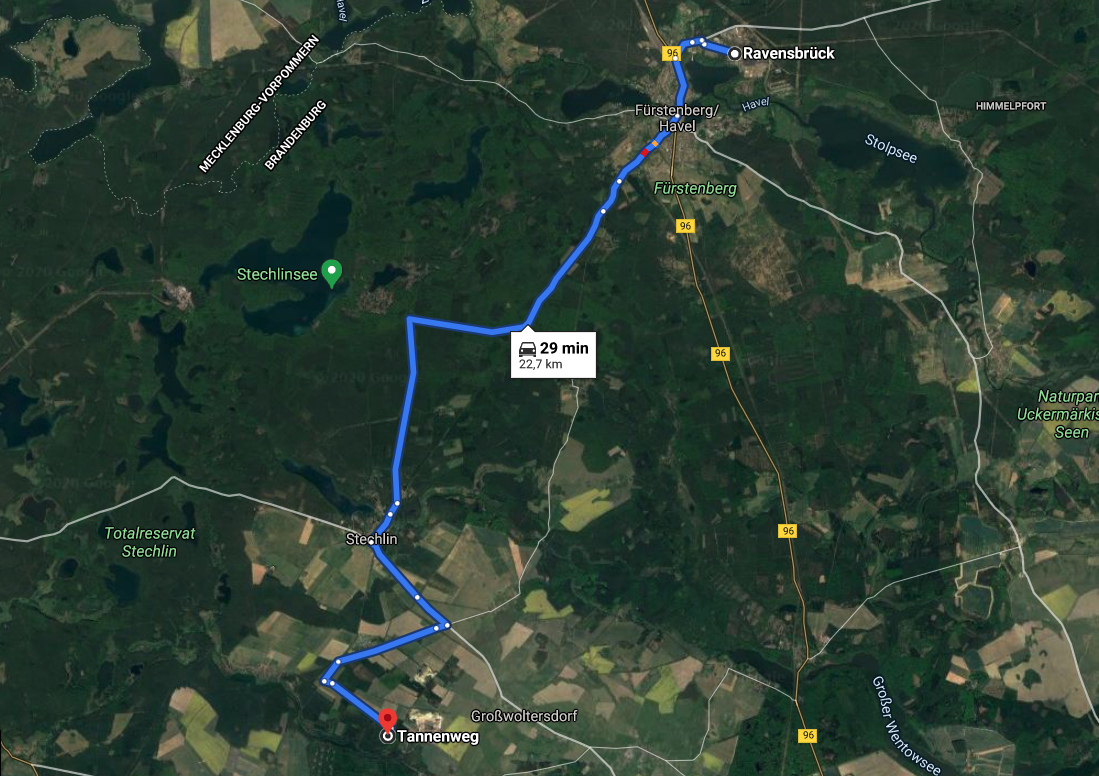
Huvudbyggnad i Gut Hartzwalde. Hit kom Vita bussar innan de körde till Ravensbrück och därefter till Padborg. Godset ligger ca. 80 km norr om Berlin..

Gut Hartzwalde. Hit kom Vita bussar innan de körde till Ravensbrück och därefter till Padborg.

Gut Hartzwalde. Hit kom Vita bussar innan de körde till Ravensbrück och därefter till Padborg.


Himmlers massör hette Felix Kersten  STOP  Kersten hade gods i Tyskland som hette Gut Hartzwalde  STOP Gut Hartzwalde låg 2 mil från koncentrationslägret Ravensbrück STOP Vita bussar plockade på Kerstens begäran hans folk därifrån STOP  Först därefter åkte de till Ravensbrück och tog upp fångar från lägret  STOP  Det var det säkraste sättet för tyskar (inkl. tyska nazister) att fly Tyskland  var ta sig till Lübeck och därifrån, vidare till Sverige STOP Man hoppades att transporten i de Vita bussarna och fordon med rödakors emblem gav de skydd STOP Allierades flyg försökte stoppa all trafik längs alla vägar och järnvägar  STOP Vita buss konvojen hade dock blivit beskjuten STOP Flera av de befriade och en svensk förare blev dödades  STOP Om detta vill ingen berätta  STOP  Händelsen finns beskriven i en bok av Wilhelm Wulff Tierkreis und Hakenkreuz: Als Astrologe an Himmlers Hof  STOP Wilhelm Wulff var med under samtalen mellan Norbert Mazur, Himmler och Schellenberg som ägde rum fyra dagar innan i Gut Hartzwalde  STOP 

Att läsa i Wilhelm Wulff bok Tierkreis und Hakenkreuz: Als Astrologe an Himmlers Hof
As a result of these initiatives, a convoy of trucks laden with refugees and the members of the Hartzwalde staff arrived at Lübeck on the evening of April 25 after a long and dangerous journey. Near Schwerin, where the convoy was attacked by low-flying aircraft, three of the Swedish personnel were killed and several vehicles damaged. Upon arrival, the refugees* were accommodated in quarters furnished by the Swedish Red Cross.

* refugees - här tyskar som flydde undan Röda armén

Adressen till Gut Hartzwalde är Tannenweg, 16775 Stechlin, Tyskland


Kersten blev mycket upprörd över Folke Bernadottes bok Slutet, om räddningsinsatsen, där Kersten knappt omnämndes. Det sägs att en annan Bernadotte, kung Gustaf V kallade till sig Felix Kersten vid tvenne tillfällen och uppmanade denna att tona ned sin roll vad beträffar räddningsinsatsen. Historiker är nog överens att sanningshalten i Kerstens bok är högre än den som berättas av Folke Bernadotte. Vad är sanningen?